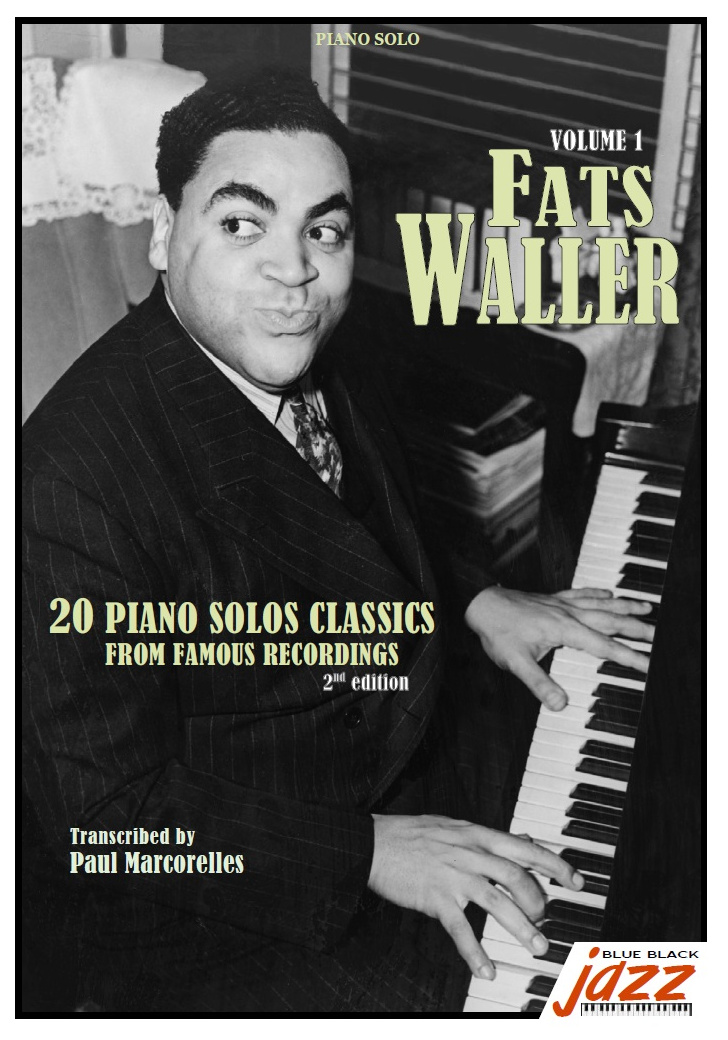
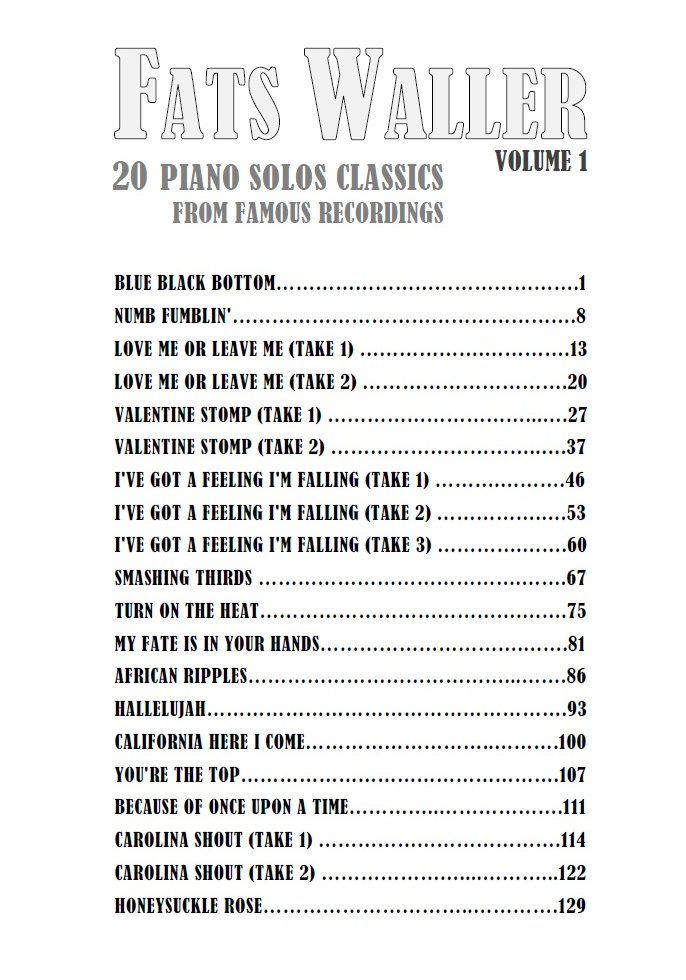
20 Solos For Piano Volume 1
Book of 20 accurate piano transcriptions from Fats Waller original recordings
Transcribed by Paul Marcorelles
2nd edition, 136 pages
1904 - 1943
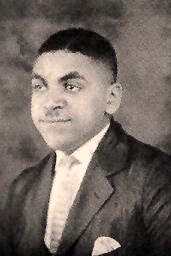
Waller was a pupil and protégé of James P. Johnson, one of the founders of Harlem stride piano. He soon developed a highly personal style of his own, combining Johnson's rigorous stride technique with an extraordinary rhythmic freedom and melodic imagination. His fame as a singer and entertainer sometimes overshadowed his importance as a pianist, but his solo recordings reveal one of the most inventive keyboard players of his generation.
Fats Waller - Somebody Stole My Gal (1935)
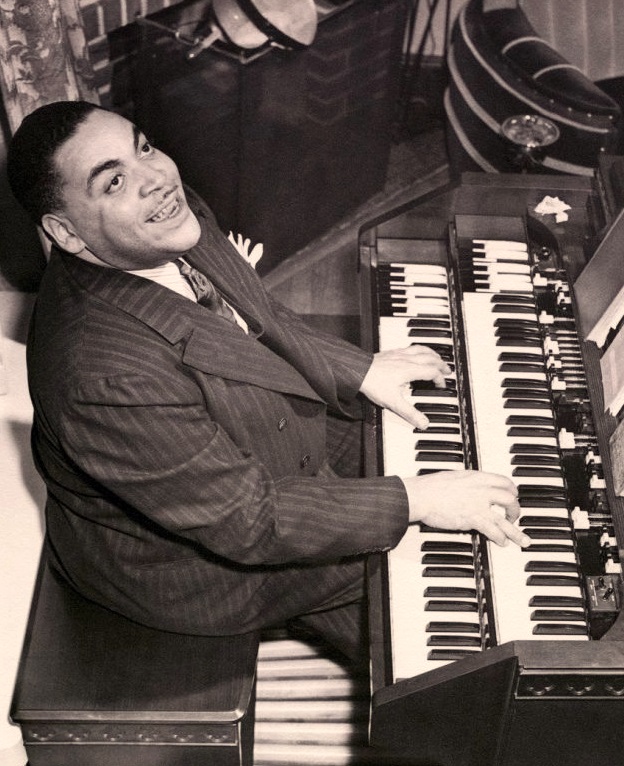
Thomas Wright Waller was born in New York in 1904. Music was present from his childhood: his father was a Baptist preacher and his mother played piano and organ. Fats learned keyboard instruments at an early age and became particularly attached to the organ, an instrument he continued to play throughout his career. He would later become one of the pioneers of the organ in jazz.
After the death of his mother while he was still a teenager, he left his family home. During these formative years he came under the influence of James P. Johnson, who became his mentor and gave him a solid grounding in the stride piano tradition that had developed in Harlem.
Stride piano had evolved from ragtime but allowed considerably more freedom in rhythm and improvisation. Its characteristic left hand alternates bass notes or tenths with chords, creating a powerful rhythmic foundation over which the right hand can improvise freely.
Harlem's musical life also provided an ideal environment for this style. Pianists such as James P. Johnson, Willie "the Lion" Smith and Fats Waller performed at clubs and at the famous rent parties, where several pianists could play during the same evening and sometimes challenge one another in informal cutting contests. Waller became one of the most distinctive representatives of this Harlem stride piano tradition.
Fats Waller made his first recordings in 1922, at the age of eighteen. Muscle Shoals Blues and Birmingham Blues were among his earliest recorded piano solos and already reveal the assurance of a remarkably accomplished young pianist.
During the 1920s he worked extensively as a pianist and organist, accompanied blues singers and produced piano rolls, which were still an important means of distributing piano music. He was also active in Harlem nightlife and played at rent parties, where stride pianists were in great demand.
Waller gradually became known not only as a performer but also as a composer. His collaboration with lyricist Andy Razaf was particularly fruitful. Together they contributed to songs and stage productions that became part of the American popular repertoire. Among the compositions associated with Waller are Honeysuckle Rose, Ain't Misbehavin', Keepin' Out Of Mischief Now and Black and Blue.
Like many songwriters of the period, Waller sometimes sold compositions for relatively small sums, and stories have long circulated about successful songs that he may have written or contributed to without receiving proper credit. Such claims are difficult to establish with certainty, but they illustrate the prolific and sometimes informal world of popular songwriting in which he worked.
Fats Waller - Saint Louis Blues (1925)
By the end of the 1920s Waller was already recognized as an outstanding stride pianist. In 1929 Victor recorded an important series of solo piano performances that remain among the clearest demonstrations of his keyboard style.
These sessions produced some of his finest and best-known stride piano recordings, including Handful Of Keys, Sweet Savannah Sue, Smashing Thirds and Numb Fumblin'.
In these performances the essential characteristics of Fats Waller's piano style can be heard particularly clearly: a powerful but flexible stride left hand, a strong sense of swing, rapid melodic figures, unexpected accents and an apparently inexhaustible ability to vary a musical idea. Beneath the humour and spontaneity lies an exceptionally controlled piano technique.
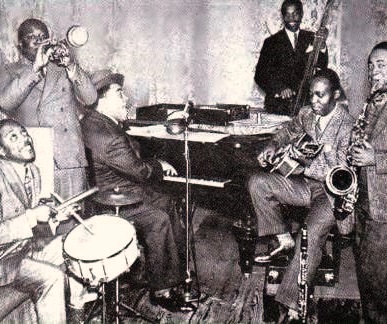
Radio played an important role in Waller's growing popularity during the early 1930s. His natural humour, distinctive voice and ability to improvise both verbally and musically were particularly well suited to the medium.
In 1934 his career entered a new phase with the recordings of Fats Waller and His Rhythm, usually a six-piece group built around Waller's piano, vocals and exuberant personality. The ensemble became enormously prolific and recorded hundreds of sides during the following years.
These recordings transformed Waller into a major popular entertainer. His comic comments, playful singing and ability to turn even ordinary popular songs into highly personal performances made him immediately recognizable. Yet the entertainment never completely displaced the pianist: short stride passages, fills, riffs and rhythmic inventions continually appear throughout the recordings.
His success extended beyond records. Waller appeared regularly on radio, toured extensively and appeared in several films. By the second half of the 1930s he had become one of the best-known African-American entertainers in the United States.
Go Down Moses (Radio broadcast, 1940)
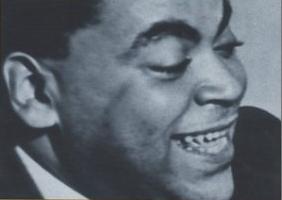
Waller's enormous popularity as a singer and entertainer sometimes obscured the importance of his piano playing. Behind the comic personality was a musician with formidable technique, rhythmic precision and a highly individual approach to improvisation.
His influence can be heard far beyond the Harlem stride tradition. His combination of a powerful left hand, relaxed swing, melodic invention and rhythmic freedom helped demonstrate how the older stride language could evolve into a more modern jazz piano style.
His solo recordings are particularly revealing. Without the vocals and stage humour, they show the full range of his musicianship: strength without heaviness, virtuosity without rigidity, and an unusual ability to make technically demanding piano playing sound spontaneous.
Fats Waller continued to perform intensively until the final months of his life. He died of pneumonia on December 15, 1943, during a train journey back from the West Coast. He was only thirty-nine years old.
His career had lasted barely two decades, yet he left an exceptionally large recorded legacy as pianist, organist, composer, singer and bandleader. His finest piano solos remain essential documents of Harlem stride and some of the most distinctive performances in the history of jazz piano.
"One never knows, do one...?"
Browse our piano transcriptions of Fats Waller, faithfully transcribed from original recordings and available as printable PDF sheet music.
Explore our collections of Fats Waller piano transcriptions, bringing together complete solos and selected recordings in downloadable PDF books.
Book of 20 accurate piano transcriptions from Fats Waller original recordings
Transcribed by Paul Marcorelles
2nd edition, 136 pages
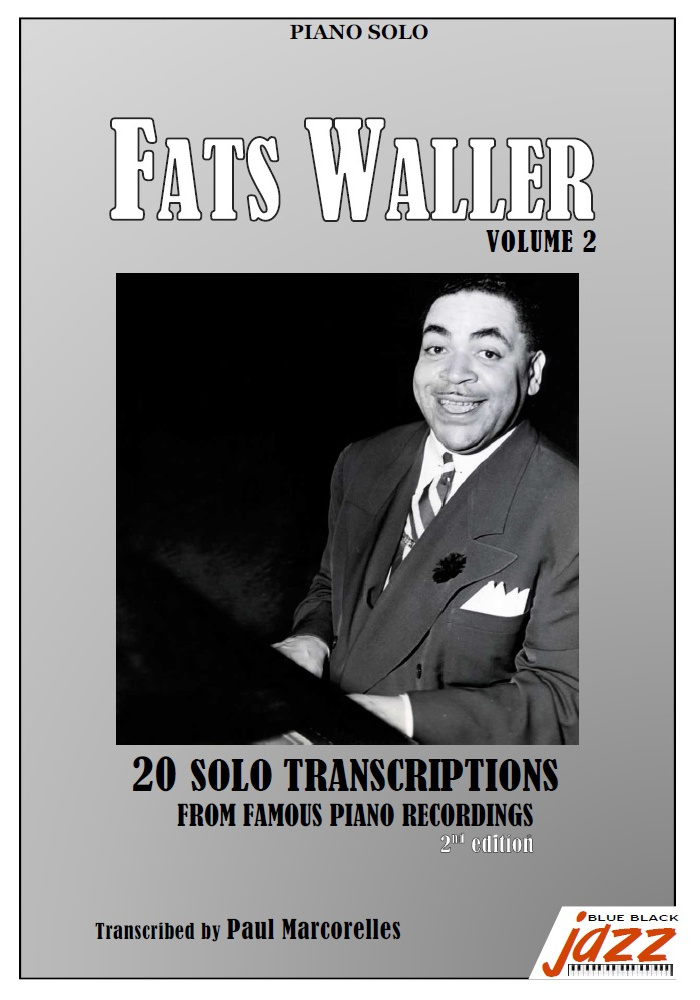
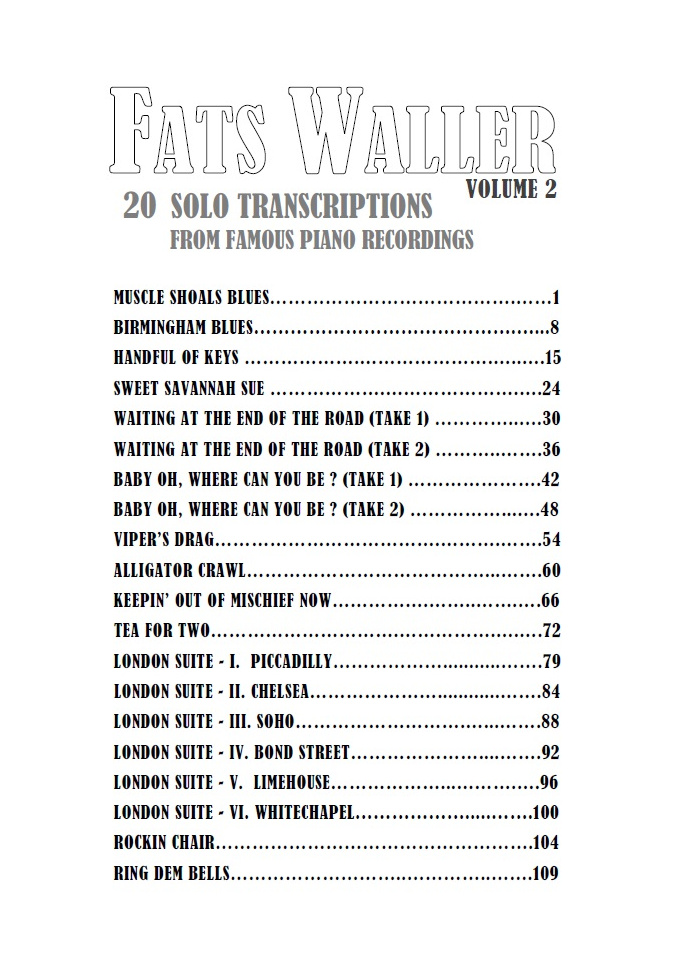
Book of 20 accurate piano transcriptions from Fats Waller original recordings
Transcribed by Paul Marcorelles
2nd edition, 115 pages
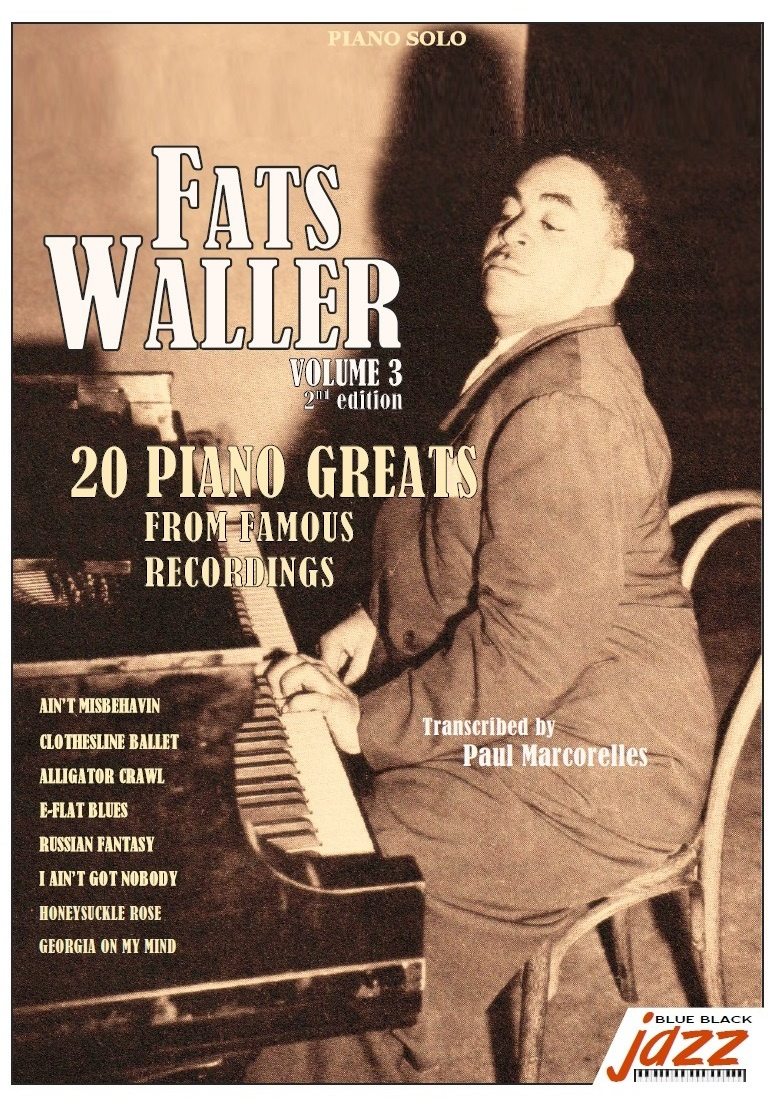
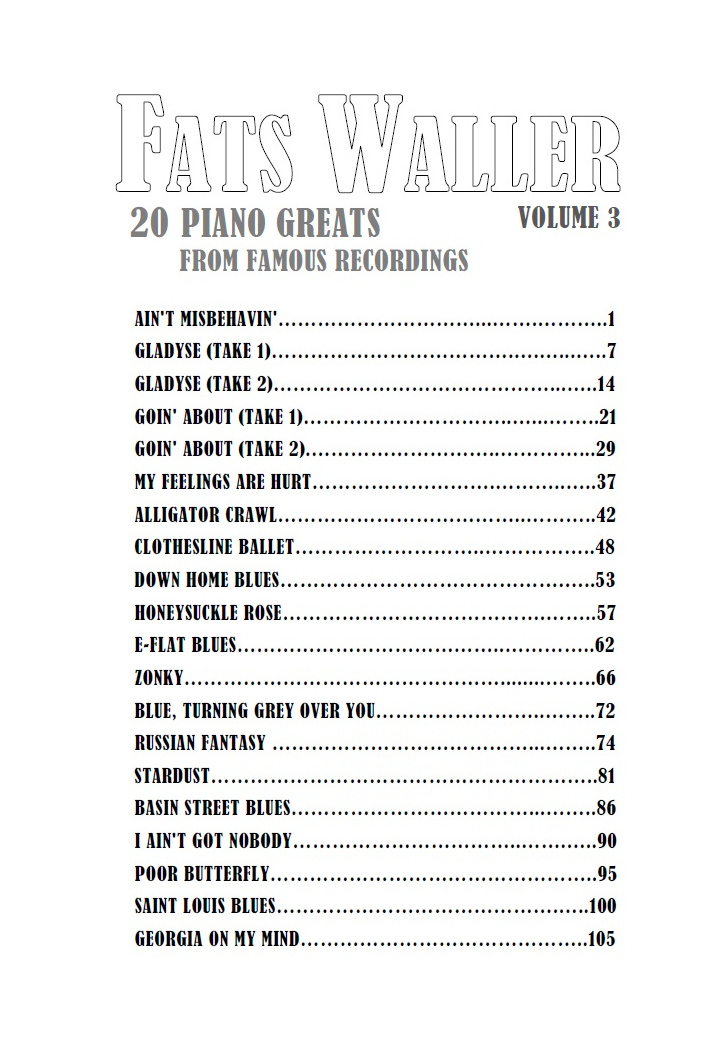
Book of 20 accurate piano transcriptions from Fats Waller original recordings
Transcribed by Paul Marcorelles
2nd edition, 113 pages
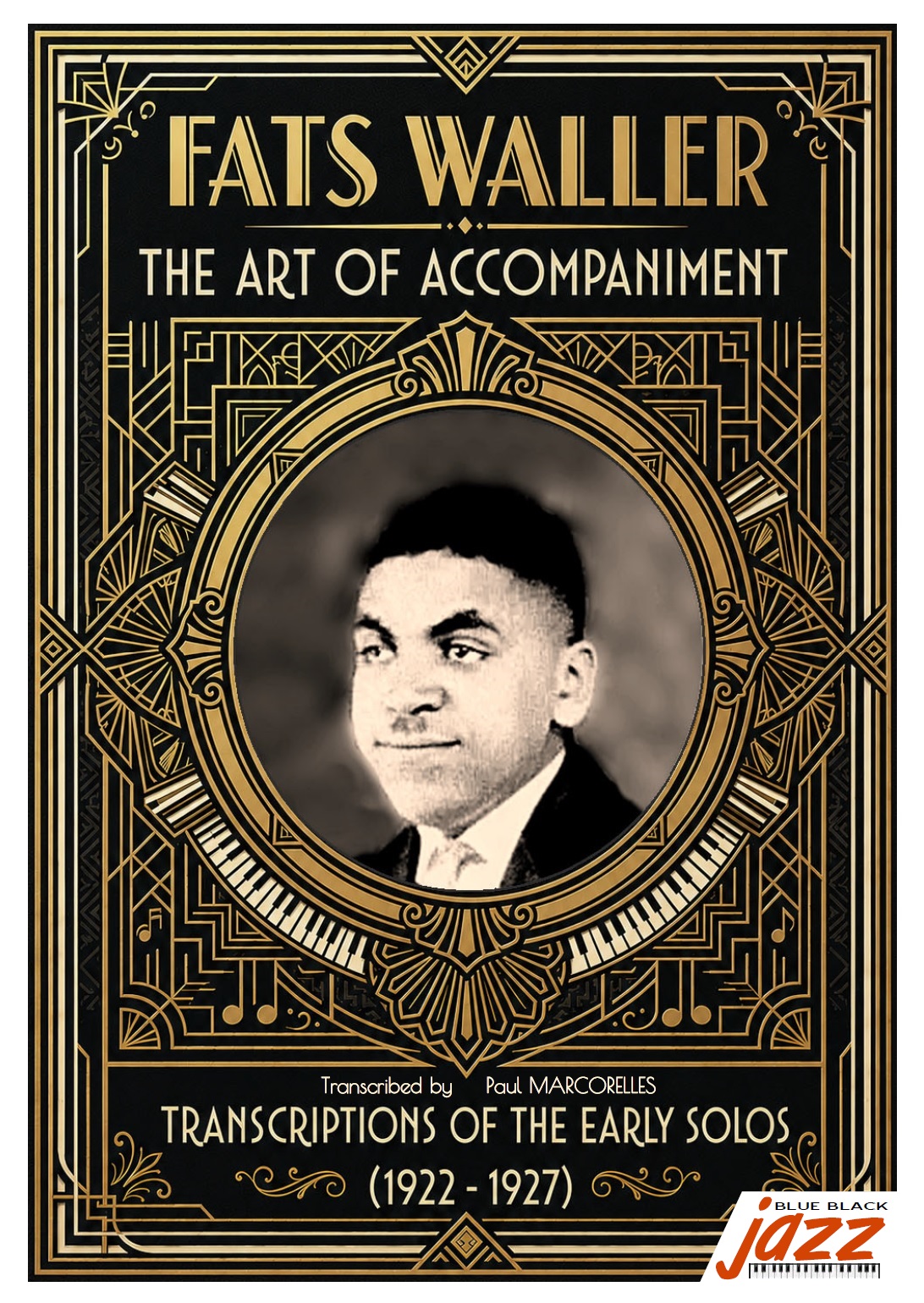
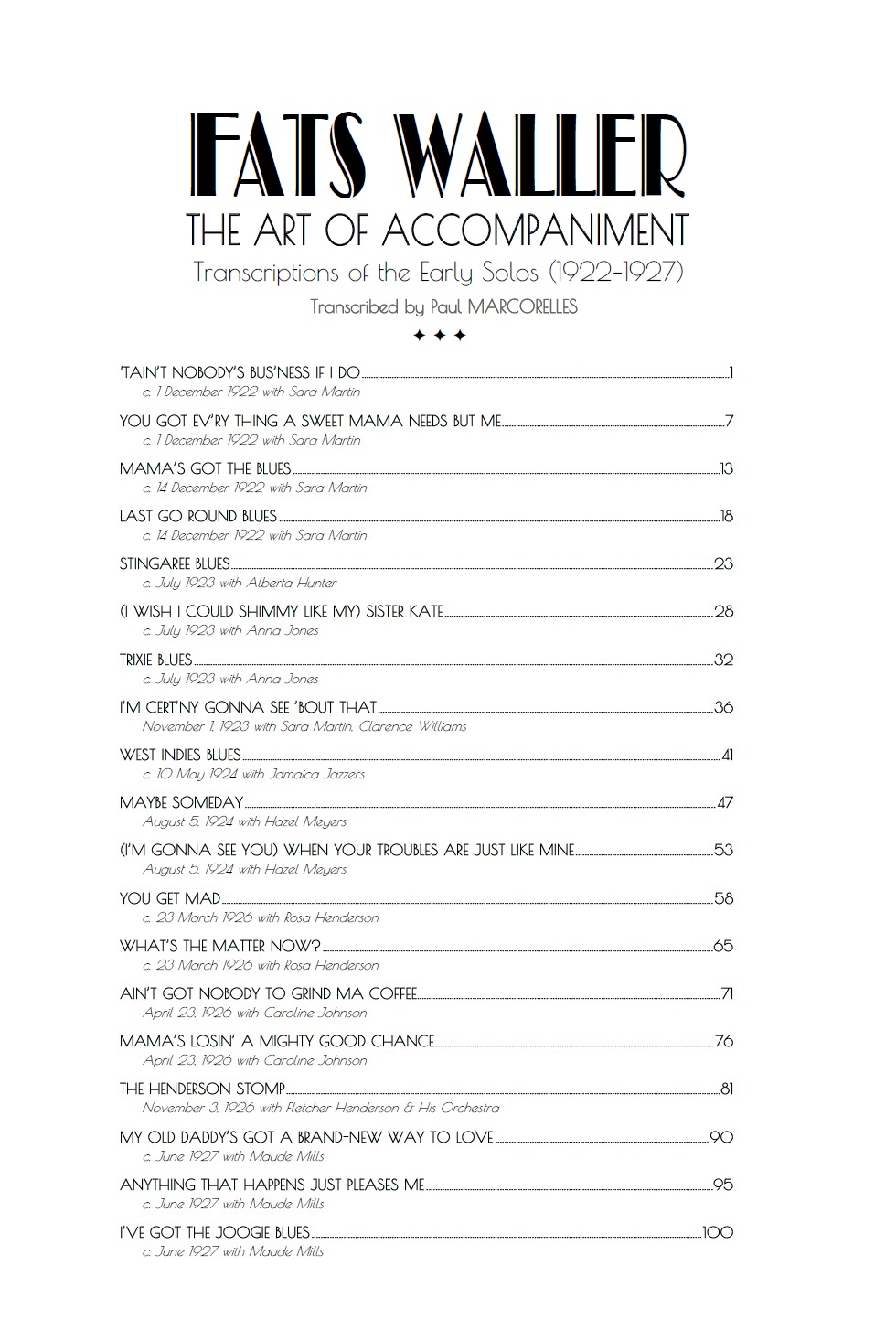
19 Transcriptions of Fats Waller piano accompaniment solos, faithfully adapted from the original recordings
Transcribed by Paul Marcorelles
106 Pages.